
Blackjack Rules Explained: Every Rule You Need to Know
Sitting down at a blackjack table for the first time can feel like walking into a room where everyone else already knows the secret handshake. Cards fly, chips slide, and the dealer moves through each hand with a rhythm that seems almost automatic. For a newcomer, that pace can be intimidating, especially when a single missed rule, like whether the dealer hits on a soft 17 or whether a table allows resplitting aces, can quietly shift the odds against you without you ever realizing it.
The truth is that blackjack is one of the most approachable games in the casino, but only once you understand the rules that govern it. Unlike poker, where strategy is shaped by reading opponents, blackjack is a game of fixed structure. The dealer does not improvise. Every hit, stand, and payout follows a predictable set of rules of blackjack that, once learned, let you play with confidence instead of guesswork.
This guide breaks down every rule you need to know, from the basic objective of the game to the fine print that separates one casino's table from another. Whether you are brand new to the felt or simply want a refresher before your next session, this is your complete reference for how blackjack actually works.
Standard Blackjack Rules
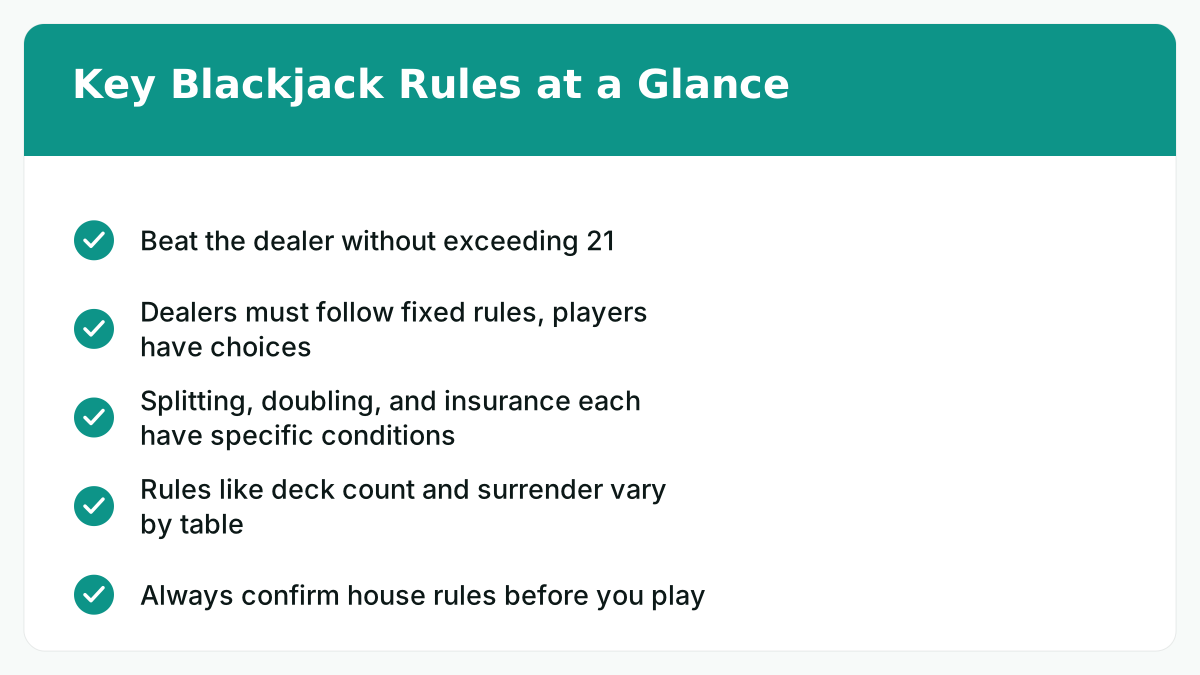
At its core, blackjack has one simple objective: build a hand value closer to 21 than the dealer's hand without exceeding 21. That is the entire premise of the game, and everything else, every rule, every strategy decision, exists in service of that single goal. You are not trying to hit exactly 21 every time, and you are not competing against other players at the table. You are only trying to beat the dealer's final total.
The game moves through a familiar cycle in every hand. Players place their bets, cards are dealt, decisions are made to hit or stand, and then the dealer reveals their hand and pays out or collects bets accordingly. If you are still getting comfortable with the flow of a hand, it can help to work through a complete beginner's guide to how to play blackjack before diving deeper into the rule variations covered here.
Before going further, it helps to know the basic vocabulary. A hit means taking another card. A stand means keeping your current total and ending your turn. A bust means your hand exceeds 21, which is an automatic loss regardless of what the dealer does afterward. A push is a tie between player and dealer, which returns the original bet. Knowing these terms makes every rule discussed below easier to follow.
How a Round of Blackjack Unfolds
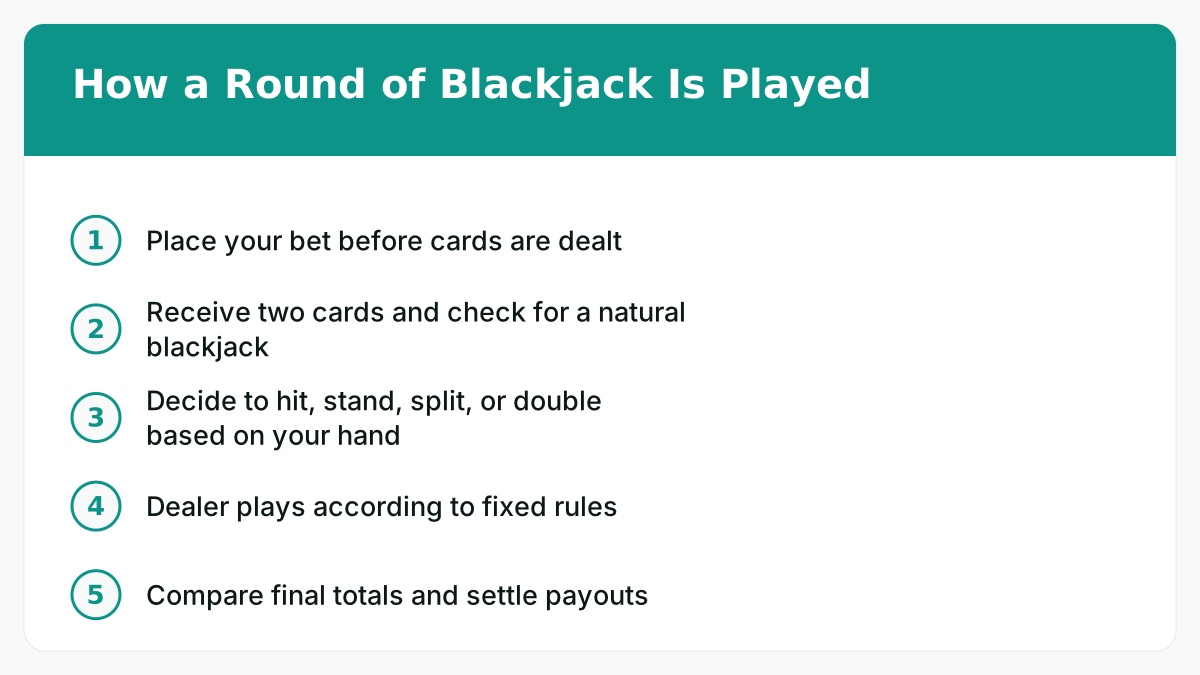
Every round begins with players placing their bets before any cards are dealt. Once bets are locked in, the dealer distributes two cards to each player and two to themselves, typically with one dealer card face up and one face down. Players then act on their hands one at a time, choosing to hit, stand, double down, or split, depending on what their cards allow. After every player has finished acting, the dealer reveals the hidden card and plays out their hand according to fixed rules, with no discretion involved.
A natural, or blackjack, occurs when a player's first two cards total exactly 21, meaning an ace paired with a ten value card. This is typically the strongest possible outcome, resulting in a payout higher than a standard win. If the dealer also has a natural, the hand usually results in a push. Because naturals happen early and pay differently than regular wins, recognizing them the moment your cards are dealt is an important part of understanding the flow of the game.
Card Values and Hand Totals
Number cards count at their face value, so a 7 is worth seven points and a 4 is worth four points. Face cards, meaning jacks, queens, and kings, all count as ten. Aces are the flexible card in the deck, counting as either one or eleven depending on which value benefits the hand without causing a bust.
- Number cards (2 through 10): counted at face value
- Face cards (jack, queen, king): each counted as ten
- Aces: counted as one or eleven, whichever keeps the hand strongest
- A hand with an ace counted as eleven and still under 21 is called a soft hand
- A hand with no ace, or an ace forced to count as one, is called a hard hand
The difference between soft and hard hands matters more than many players realize. A soft hand has built in flexibility because the ace can drop from eleven to one if another card would otherwise cause a bust. A hard hand has no such safety net, which means every additional card carries real risk. This distinction shapes many of the strategy decisions covered later in this guide, and it is one of the first concepts worth mastering when you review the basics of the game.
Dealer Rules and Why They Matter
One of the most important things to understand about blackjack is that the dealer does not play with any freedom of choice. Every casino sets a fixed rule for how the dealer must act on every possible hand, and the dealer follows that rule mechanically, every single time. There is no bluffing, no hesitation, and no strategic decision making on the dealer's side of the table.
This might seem like a minor procedural detail, but it is actually one of the most useful things a player can know. Because the dealer's behavior is fully predictable, players can plan their own decisions around exactly how the dealer will act in every situation. Understanding these blackjack rules is often the difference between playing on instinct and playing with a genuine strategic edge.
Dealers never choose how to play their hand, they simply follow the rules of blackjack that are fixed in advance.
The specific rule a casino chooses for its dealers directly affects the house edge. Small variations, like whether the dealer stands or hits on a soft 17, might look trivial on paper, but over the course of many hands they meaningfully shift the odds. This is why serious players always check the dealer rules posted at a table before playing, rather than assuming every table works the same way.
Stand on 17 vs Hit on Soft 17
Two dealer rule variations are especially common: dealer stands on all 17s, or dealer hits on soft 17. A hard 17 is treated the same way in both versions, with the dealer standing. The difference appears specifically on a soft 17, meaning a hand like an ace and a 6.
When the dealer is required to hit on soft 17, they get one more opportunity to improve their hand into something between 18 and 21, which slightly increases the house's advantage. When the dealer must stand on all 17s, including soft 17, that extra opportunity disappears, which is marginally more favorable to players. It is a small rule on the surface, but it is one of the clearest examples of how a single word on a table sign changes the underlying math of the game.
Dealer Blackjack and Peeking
In many blackjack games, once the initial cards are dealt, the dealer will check, or peek, at their face down card if their face up card is an ace or a ten value card. This peek determines whether the dealer has a natural blackjack before any player has the chance to act further or risk additional bets.
If the dealer does have a natural, the hand ends immediately for most players, with losses collected except for players who also have a natural, which typically results in a push. If the dealer does not have a natural, play continues as normal. This peeking procedure protects players from doubling or splitting into a hand that was already destined to lose to a dealer blackjack, which is a small but meaningful protection built into the rule structure of the game.
Splitting, Doubling, and Insurance Explained
Once the fundamentals of dealing, hitting, and standing feel comfortable, the next layer of blackjack involves three optional plays that trip up even experienced players: splitting, doubling down, and insurance. These moves are not required on any given hand, but understanding when they are available, and when they make sense, is essential once you have moved past the basics of the game.
Each of these options carries its own restrictions, its own risk profile, and its own set of common misunderstandings. Getting familiar with the mechanics behind each one now will make the mistakes covered later in this guide much easier to recognize and avoid at the table.
When and How to Split Pairs
Splitting is available when a player's first two cards share the same value, such as two 8s or two queens. Choosing to split separates the pair into two independent hands, each with its own additional bet equal to the original wager. From there, each hand is played out separately, as if it were its own fresh hand.
- Splitting requires an additional bet matching the original wager
- Each split hand is played independently, with its own hit and stand decisions
- Most tables allow splitting any two cards of equal value
- Aces often carry special restrictions once split
- Many tables limit players to one additional card per split ace
- Resplitting limits vary from table to table and should be confirmed in advance
Splitting aces in particular tends to come with tighter restrictions than splitting any other pair. Many tables only allow a single additional card to be dealt to each split ace, with no further hitting or resplitting permitted afterward. This restriction exists specifically because two aces represent one of the strongest possible starting positions, and casinos limit how far that advantage can be pushed.
Doubling Down Rules
Doubling down allows a player to double their original bet in exchange for receiving exactly one more card, after which they must stand regardless of the resulting total. This option is typically available on the first two cards of a hand, before any hits have been taken, though the specific totals eligible for doubling can vary between tables.
Doubling is most commonly used when a player's first two cards add up to a strong starting total, such as 10 or 11, where one additional card has a high likelihood of producing a strong final hand. The trade off is real: committing to exactly one more card removes flexibility, so doubling on a weak total can backfire quickly. This is why doubling is often described as adding both risk and reward to a hand in equal measure.
Insurance Bets Explained
Insurance is offered specifically when the dealer's face up card is an ace. It is technically a side bet, separate from the main hand, where a player wagers that the dealer's hidden card will give them a natural blackjack. If the dealer does have a natural, the insurance bet pays out, offsetting the loss of the main hand. If the dealer does not have a natural, the insurance bet is simply lost, and play continues as normal.
Because insurance operates independently from the outcome of the main hand, it carries its own distinct risk profile rather than functioning as true protection for your original bet. Many players treat it instinctively as a safety net, but it is worth thinking of insurance as its own separate wager with its own separate odds, rather than an automatic extension of good strategy.
Common Rule Variations Between Tables
One of the most overlooked realities of blackjack is that the game rules are not identical from casino to casino, or even from table to table within the same venue. The core objective stays the same everywhere, but the specific structure around deck count, surrender options, resplitting limits, and payout ratios can shift the odds noticeably in one direction or the other.
Surrender rules are a good example of this variation. Some tables allow a player to forfeit half their bet and exit a weak hand early, while others do not offer surrender at all. Resplitting limits also differ, with some tables allowing multiple resplits and others capping a hand at just one split. Payout ratios for a natural blackjack can vary too, with some tables paying more generously than others. None of these differences are obvious just by glancing at the felt, which is why reading the table rules, or asking the dealer directly, is always worth the extra minute.
A single word like surrender or resplit on a table sign can change the entire odds of the game of blackjack you are about to play.
Players coming from other card games sometimes assume rule consistency carries across game types, but that assumption does not hold. Just as blackjack rules vary by table, other card games follow their own distinct structures. If you are curious how a different game handles similar concepts, this breakdown of baccarat online rules and betting basics is a useful comparison point for seeing how differently two popular card games can be structured.
Deck Count and Its Impact
Blackjack can be dealt from a single deck, a handful of decks, or, in many modern casinos, six to eight decks shuffled together in a shoe. The number of decks in play has a real effect on both the odds of the game and the strategies players can realistically use.
- Single deck games tend to favor players slightly more than multi deck games, all else being equal
- Multi deck games make card counting significantly more difficult due to the larger number of cards in circulation
- More decks generally mean less predictable card sequencing for players tracking totals
- Casinos often pair multi deck games with other rule adjustments that restore the house edge
- Always check how many decks a table uses if you are adjusting your strategy based on deck count
Because deck count interacts with other rules, like doubling restrictions or payout ratios, it is rarely useful to judge a table by deck count alone. A single deck game with unfavorable payout ratios can end up less favorable than a multi deck game with generous surrender and doubling rules. The full picture always matters more than any single variable.
Rules Mistakes That Cost Players Money
Even players who understand the basic flow of blackjack often lose money not because of bad luck, but because of preventable misunderstandings about the rules themselves. Misreading how a dealer's forced play works, misunderstanding a payout structure, or ignoring table specific variations before sitting down are among the most common and most avoidable mistakes at the table.
These mistakes rarely feel dramatic in the moment. A slightly wrong decision on a soft hand, or an emotional insurance bet, does not look catastrophic on any single hand. But repeated over many hands and many sessions, these small missteps add up to a meaningfully worse outcome than a player who understands the rules clearly from the start.
Misplaying Soft Hands
Soft hands are one of the most commonly misplayed situations at the blackjack table, especially among newer players. Because a soft hand contains an ace that can count as either one or eleven, it behaves very differently than a hard hand of the same visible total, and treating them the same way is a frequent and costly error.
Understanding soft hands versus hard hands is one of the fastest ways to stop misplaying strong cards.
A player holding a soft 17, for example, has far more flexibility than a player holding a hard 17, because the ace can absorb an additional card without automatically busting. Treating a soft 17 with the same caution as a hard 17 means missing opportunities to improve a hand safely. Reviewing basic strategy tips around soft hand decisions is one of the simplest ways for a newer player to close this gap quickly.
Overusing Insurance
Insurance has a way of feeling like a reasonable, protective decision, especially in the moment right after the dealer reveals an ace. But taking insurance repeatedly, out of habit or anxiety rather than genuine analysis, is one of the most common ways players quietly give away value over time.
The rational way to think about insurance is to treat it as a separate wager with its own odds, rather than an emotional response to the fear of losing a strong hand to a dealer natural. Players who take insurance every time an ace appears, regardless of the strength of their own hand, are making a decision based on comfort rather than the actual structure of the bet. Recognizing this pattern is often the first step toward playing more disciplined blackjack overall.
Summary Table of Key Rules
After working through dealer behavior, optional plays, table variations, and common mistakes, it helps to step back and consolidate everything into one condensed reference. This section exists purely as a quick review, something to glance at before sitting down at a new table or trying a new casino for the first time.
None of the individual rules covered in this guide are complicated in isolation. What makes blackjack occasionally confusing is simply the number of small variations layered on top of the basic structure, from dealer rules to splitting restrictions to payout ratios. Having a condensed checklist on hand removes the guesswork right when it matters most, which is before your bet is already on the table.
Quick Reference Checklist
- Objective: build a hand closer to 21 than the dealer without busting
- Card values: number cards at face value, face cards as ten, aces as one or eleven
- Dealer rules are fixed, with common variations being stand on all 17s versus hit on soft 17
- Dealers typically peek for a natural blackjack when showing an ace or ten value card
- Splitting is available on equal value pairs, with aces often facing extra restrictions
- Doubling down usually allows one additional card in exchange for doubling the original bet
- Insurance is a separate side bet offered only when the dealer shows an ace
- Deck count, surrender rules, and payout ratios vary by table and affect the house edge
- Always confirm the specific rules and table etiquette at a new table before playing
That final point is worth repeating on its own: rules vary. Even experienced players who have logged countless hours at the felt still take a moment to check dealer rules, payout ratios, and splitting restrictions before committing to a new table, because assuming consistency across venues is one of the easiest ways to misjudge the odds of a hand.
What are the basic rules of blackjack?
The core rule is to build a hand value closer to 21 than the dealer without going over. Number cards count at face value, face cards count as ten, and aces count as one or eleven depending on the hand.
Why do dealer rules matter so much?
Dealers must hit or stand based on fixed rules with no personal choice, so knowing whether a table hits or stands on soft 17 helps you judge the house edge and adjust your own decisions.
Can you always split any pair?
Most tables allow splitting any two cards of equal value, but rules around resplitting and splitting aces often carry restrictions, so it is worth confirming before you sit down.
Is insurance a good bet?
Insurance is a side bet offered when the dealer shows an ace, and while it can feel like protection, many players end up misusing it because the odds are not always in their favor.
Do blackjack rules change between casinos?
Yes, deck count, surrender options, doubling restrictions, and payout ratios for a natural blackjack can all vary between tables, which is why reviewing the rules of blackjack at each table matters.
Knowing the rules of blackjack is the foundation everything else is built on. Strategy charts, betting systems, and table instincts all rest on a clear understanding of how the game actually works, from dealer obligations to the fine print on splitting, doubling, and insurance. Once that foundation is solid, the game stops feeling unpredictable and starts feeling like something you can approach with genuine confidence.
At Best Blackjack in Abu Dhabi, this kind of clear, rule by rule breakdown is exactly what we aim to provide for players who want to understand the game properly before they sit down at a table. Whether you are reviewing the basics for the first time or double checking a variation you have not seen before, Best Blackjack in Abu Dhabi is built around helping players play smarter, not just longer.
Ready to put these rules into practice? Visit Best Blackjack in Abu Dhabi for more in depth guides on strategy, table etiquette, and everything else you need before your next hand.
Explore More Blackjack Guides