
How to Play Blackjack: A Complete Beginner's Guide
What You Need to Know Before You Start
Blackjack is one of the easiest casino games for beginners to pick up, and that reputation is well earned. Unlike games that rely on complicated scoring systems or dozens of betting options, the rules of blackjack stay consistent across most tables, whether you are sitting down at a casino floor or watching a friend explain the game for the first time. Once you understand the basic structure, you can follow a round from start to finish without feeling lost.
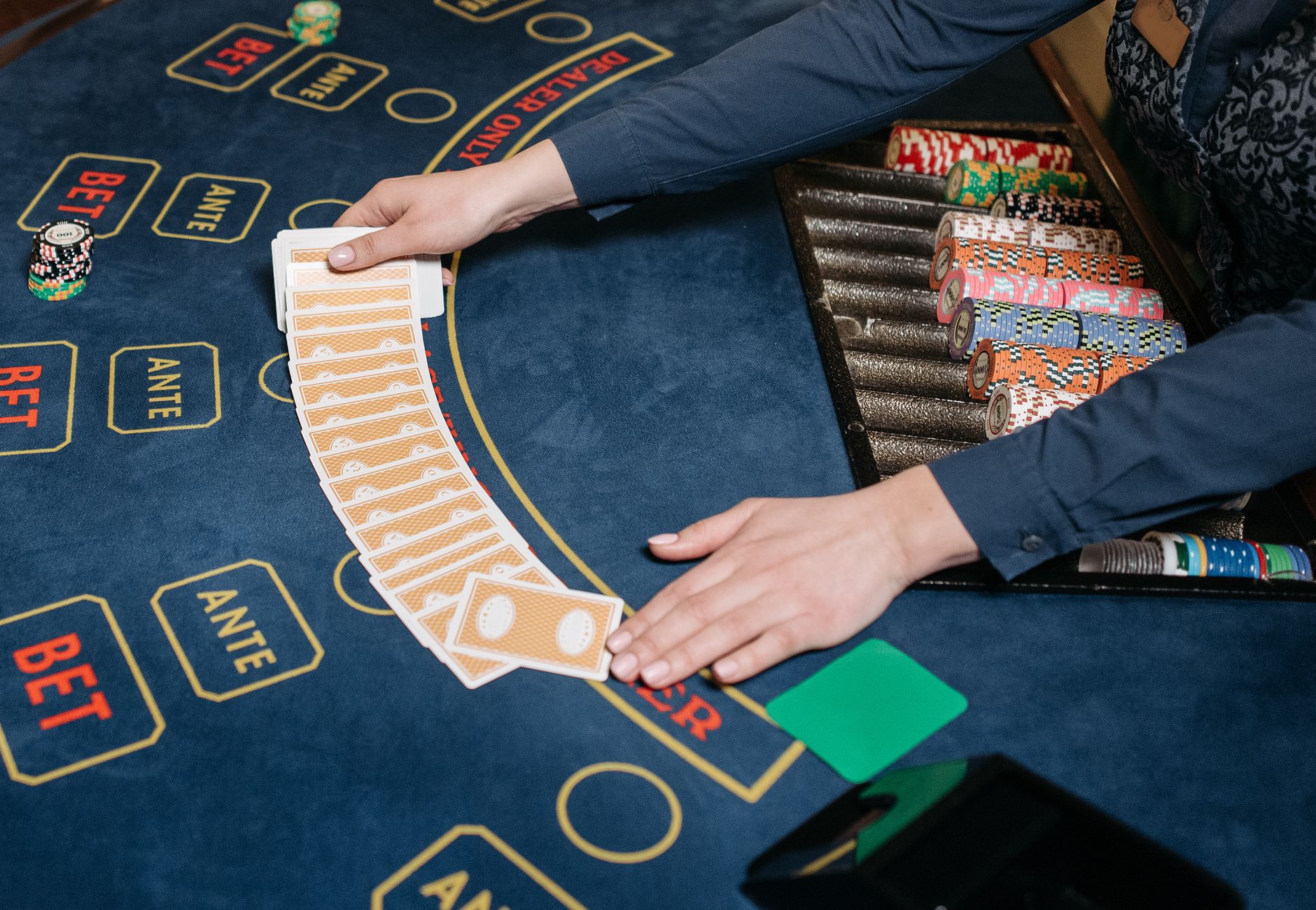
Every blackjack table uses a similar set of equipment. Games are dealt from a standard deck of 52 cards, though many tables shuffle several decks together to keep the count harder to track and the game moving smoothly. Players use chips to place their bets in a marked betting circle, and the table itself is laid out with clear sections for the dealer, the deck or shoe, and each player's position. Learning to recognize this layout is the first step toward feeling comfortable at the table.
This guide covers how to play blackjack from a rules perspective. It is meant to walk you through the mechanics, the terminology, and the flow of a typical round, not to promise any particular outcome. Blackjack involves chance, and no guide can guarantee winning hands. What it can do is make sure you understand exactly what is happening at the table, so you can play with confidence instead of guesswork. If you want a refresher on the fundamentals before diving deeper, this overview of blackjack basics is a good place to start.
Who This Guide Is For
This guide is written for total beginners who have never sat at a blackjack table before. If terms like 'hit,' 'stand,' or 'natural blackjack' sound unfamiliar, you are exactly who this article is meant for. There is no assumption of prior card game experience anywhere in this guide.
It is also useful whether you plan to play in person at a physical table or you are simply curious how blackjack is played before ever taking a seat. Some readers want to prepare for an upcoming trip, others just want to understand the game they see in movies and shows. Either way, the fundamentals covered here apply the same way.
The Goal of the Game
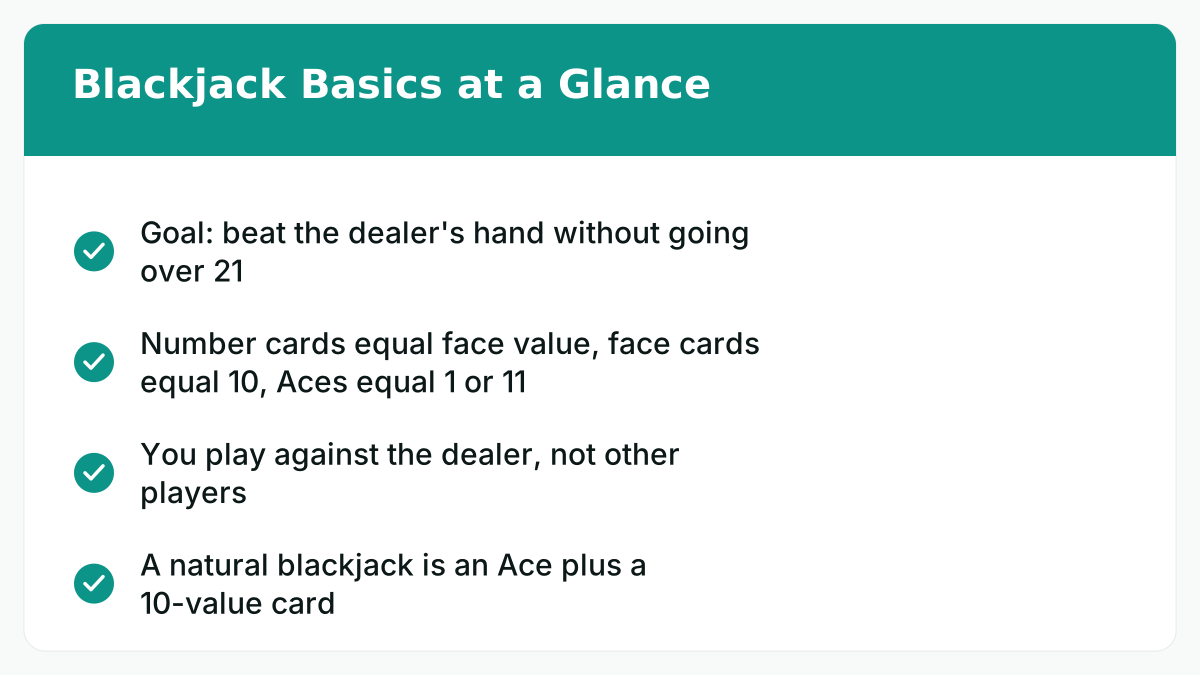
The objective in the game of blackjack is simple to state, even if new players sometimes misunderstand it at first. You are trying to get a hand value closer to 21 than the dealer without going over that number. That is the entire premise of the game, and everything else, from card values to betting decisions, exists to support that single goal.
A common myth trips up a lot of first-time players: they think the goal is simply to hit 21 exactly. That is not quite right. You are not chasing a specific number, you are trying to beat the dealer's hand. A hand of 19 can win just as easily as a hand of 21, as long as the dealer ends up with less than 19 or busts entirely. The magic number 21 matters only because it is the ceiling you cannot cross, not because it is the only winning total.
This is where the concept of 'busting' comes in. If your hand's total value goes over 21, you bust, and that ends your hand immediately, regardless of what the dealer does afterward. Even if the dealer later busts too, a player who has already busted has already lost their bet. This is one of the most important mechanics to internalize early, since it shapes almost every decision you will make during a round. Some readers coming from other table games may already be familiar with fixed betting structures from something like baccarat rules and betting basics, but blackjack differs in that your decisions during the hand directly affect the outcome.
Blackjack is not a race to 21, it is a race to beat the dealer.
Beating the Dealer vs Beating Other Players
One detail that surprises many newcomers is that each player at the table plays against the dealer only, not against each other. There is no competition between the players sitting side by side. You are not trying to have a better hand than the person next to you, you are only comparing your hand to the dealer's.
This means multiple players can win, lose, or tie in the same round. It is entirely possible for every player at the table to beat the dealer at once, just as it is possible for everyone to lose in the same round. Understanding this early removes a lot of unnecessary pressure, since your fellow players are not your opponents, they are simply playing their own hands alongside you.
Card Values Explained
Before you can make sense of any hand, you need to know how each card is valued. Blackjack keeps this part refreshingly straightforward compared to many other card games. Number cards, from 2 through 10, are worth their exact face value. A 7 is worth seven points, a 4 is worth four points, and so on. There is no interpretation needed.
Face cards, meaning the Jack, Queen, and King, are all worth 10 points each. It does not matter which face card you are holding, all three carry the same value. This makes counting a hand with face cards very simple once you get used to it.
Aces are the one flexible card in the deck. An Ace can count as either 1 or 11, whichever value benefits your hand more at that moment. This flexibility is what makes the Ace such a powerful card in blackjack, since it can adapt to whatever situation your hand is in.
An Ace can be your best friend or your safety net, since it counts as 1 or 11.
- Number cards (2 to 10): worth their face value
- Jack, Queen, King: each worth 10 points
- Ace: worth 1 or 11, whichever helps your hand more
- Hand value is the sum of all cards currently in your hand
Understanding Soft and Hard Hands
Once you understand card values, the next concept to learn is the difference between a soft hand and a hard hand. A 'soft hand' includes an Ace counted as 11. For example, an Ace and a 6 together form a soft 17, since the Ace is being counted at its higher value. Soft hands give you more flexibility because if you draw another card and go over 21 counting the Ace as 11, you can simply recount the Ace as 1 instead.
A 'hard hand' has no Ace at all, or it has an Ace that must count as 1 to avoid busting. A hand of 10 and 9 is a hard 19, since there is no Ace involved. Similarly, if you are holding an Ace, a 6, and a 9, that Ace can no longer count as 11 without pushing the total over 21, so the hand becomes a hard 16. Recognizing whether you are holding a soft or hard hand affects how safely you can hit for another card.
Step by Step: How a Round of Blackjack Is Played
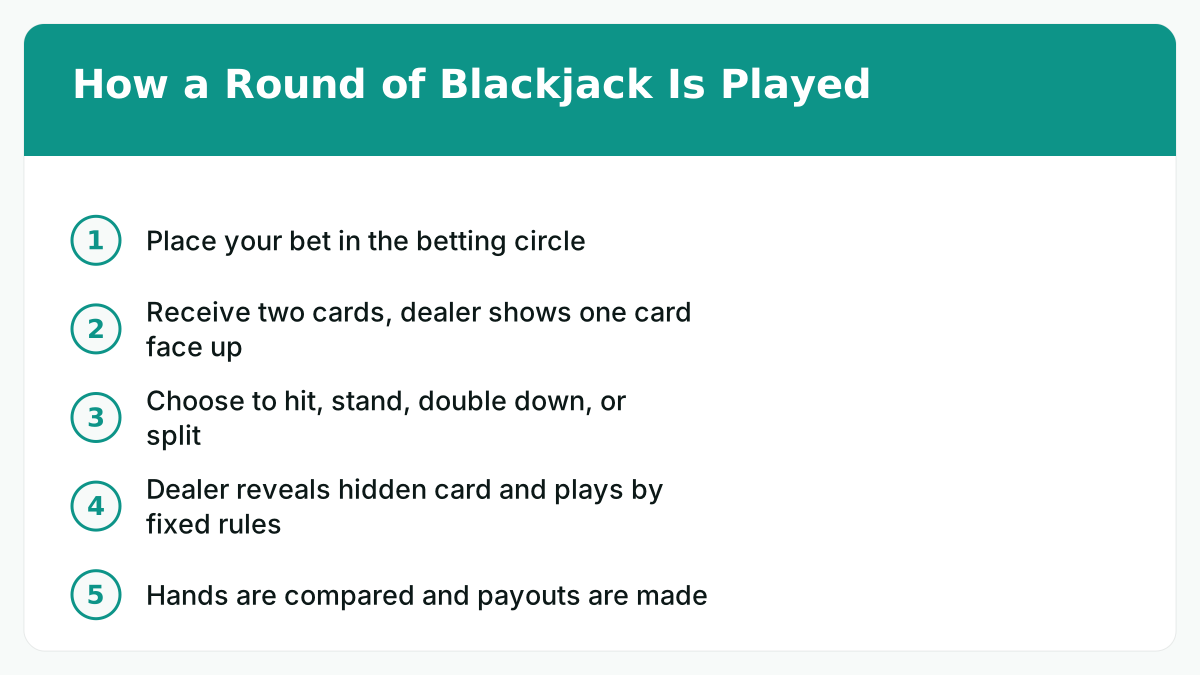
Now that the basic concepts are covered, it helps to walk through an entire round from start to finish. Seeing the full sequence in order makes it much easier to understand exactly how blackjack is played, rather than trying to piece together isolated rules. A full round moves through betting, dealing, player decisions, and finally the dealer's turn and payout.
Each of these stages happens in a fixed order, and once you have seen the sequence a few times, it becomes second nature. For a more detailed look at how specific tables may vary these steps, you can check this full breakdown of blackjack rules.
Step 1: Placing Your Bet
Every round begins the same way: chips are placed in the betting circle before any cards are dealt. This is your commitment for that hand, and once the cards start coming out, the initial bet generally cannot be changed except through specific options like doubling down, which we will cover shortly.
Step 2: The Deal
After bets are placed, each player and the dealer receive two cards. Usually one dealer card is dealt face up and the other face down. The face-up card, often called the 'upcard,' gives players a small piece of information about what the dealer might be holding, which becomes important when deciding how to play your own hand.
Step 3: Player Decisions
This is the stage where the real decision-making happens. Players have a handful of basic options to choose from on each turn:
- Hit: take another card to try to get closer to 21
- Stand: keep your current hand and take no more cards
- Double down: double your original bet in exchange for exactly one more card
- Split: if your two cards match in value, separate them into two hands, each with its own bet
Players decide in turn, working around the table before the dealer reveals more cards. Each player makes their choices independently based on their own hand and the dealer's visible upcard, and once every player has finished their turn, the action moves to the dealer.
Step 4: Dealer's Turn and Payout
Once all players have completed their decisions, the dealer reveals the hidden card and must hit or stand based on fixed rules, commonly standing on 17. Unlike players, the dealer has no choice in the matter, their actions are dictated entirely by the house rules for that table.
After the dealer's hand is finished, all remaining hands are compared and winning bets are paid out. A natural blackjack, meaning an Ace plus a 10-value card dealt as your first two cards, often pays a bonus compared to a standard win. This is one of the most exciting moments in the game, since a natural blackjack on the first two cards is one of the strongest possible outcomes for a player.
Common Beginner Mistakes to Avoid
Even with a solid grasp of the rules, beginners tend to fall into a handful of predictable habits that can cost them opportunities at the table. Recognizing these patterns ahead of time can help you avoid repeating them once you start playing for real.
- Standing too early on a low hand out of fear of busting, even when the math favors hitting
- Not knowing when doubling down or splitting is an option, and missing chances to make stronger plays
- Forgetting that the dealer follows fixed rules, unlike players who have free choice over every decision
- Treating every hand the same way instead of adjusting based on the dealer's visible upcard
Many of these mistakes come down to hesitation or a misunderstanding of how much control you actually have during your turn. For readers who want to go beyond the basic rules and start thinking about decision-making patterns, it may help to look into some blackjack strategy tips once the fundamentals feel comfortable.
The dealer follows fixed rules, but you get to choose your own moves every hand.
Misreading Soft Hands
One of the most common and specific mistakes beginners make involves soft hands. Many new players misplay hands with an Ace because they forget it can count as 1 instead of 11. This leads to standing when hitting would have been safe, or hesitating to hit when there was actually no risk of busting at all.
For example, a hand of Ace and 6 is a soft 17. Many beginners treat this the same as a hard 17 and stand out of caution, not realizing that hitting carries no risk of busting since the Ace can simply drop back to a value of 1 if needed. Taking a moment to check whether your hand includes an Ace, and whether that Ace is currently counted as 11, can prevent this kind of hesitation.
Quick Reference Cheat Sheet
After walking through the full mechanics of the game, it helps to have everything summarized in one scannable format. Below is a quick reference covering card values, the hand goal, and the basic actions available on every turn.
- Goal: get closer to 21 than the dealer without going over
- Number cards (2 to 10): worth face value
- Face cards (J, Q, K): worth 10
- Ace: worth 1 or 11, whichever benefits the hand
- Player options: hit, stand, double down, split
- Dealer rule: typically must hit until reaching 17, then stand
- Bust: hand value over 21, an automatic loss
- Natural blackjack: an Ace plus a 10-value card on the first two cards, often paying a bonus
Keep these basics in mind before trying a real round, since having them fresh in memory will make your first few hands feel far less intimidating. It is also worth remembering that table manners and pacing matter once you sit down, so reviewing a table etiquette guide beforehand can help your first session go smoothly.
For readers who want to go deeper than this beginner overview, Best Blackjack in Abu Dhabi covers deeper rule breakdowns, including variations you might encounter at different tables and how specific house rules can shift the odds slightly in favor of the player or the dealer.
Key Terms Recap
Before you head to a table, it helps to have the core vocabulary locked in. Here is a quick recap of the terms covered throughout this guide:
- Hit: take another card
- Stand: keep your current hand and take no more cards
- Double down: double your bet for exactly one more card
- Split: separate two matching cards into two hands
- Bust: going over 21, which results in an automatic loss
- Natural blackjack: an Ace and a 10-value card dealt as your first two cards
With these terms in hand, most of what happens at a blackjack table should start to make a lot more sense. If any of these ideas still feel unclear, it is worth revisiting the frequently asked questions below for quick, direct answers to the most common beginner questions.
How do you play blackjack in simple terms?
You are dealt two cards and try to reach a hand value closer to 21 than the dealer without going over. You can hit for another card, stand, double down, or split, then the dealer plays their hand and payouts follow.
What is the goal of the game of blackjack?
The goal is to beat the dealer's hand value without exceeding 21. You are not competing against other players at the table, only against the dealer.
What are the basic rules of blackjack for beginners?
Number cards count as their face value, face cards count as 10, and Aces count as 1 or 11. Each round follows a set order: bet, deal, player decisions, then the dealer's turn.
What happens if I go over 21 in blackjack?
Going over 21 is called busting, and it means you lose that hand immediately regardless of what the dealer draws afterward.
Does the dealer have to follow rules in blackjack?
Yes, unlike players who can choose freely, the dealer must hit or stand based on fixed house rules, commonly standing once reaching 17.
What is a natural blackjack?
A natural blackjack is a starting hand of an Ace plus a 10-value card, which often pays a bonus compared to a regular win.
Learning how to play blackjack really comes down to understanding a handful of core ideas: how cards are valued, what the actual goal of the game is, and how each round moves through betting, dealing, decisions, and payout. None of it requires memorizing complicated formulas, just a clear grasp of the sequence and the vocabulary that goes with it. Once those pieces click into place, sitting down at a table for the first time feels far less intimidating.
Best Blackjack in Abu Dhabi was built to help beginners bridge the gap between reading about the rules and actually feeling ready to play, with clear breakdowns that go beyond the basics covered here.
Ready to keep learning? Visit Best Blackjack in Abu Dhabi for deeper rule breakdowns, strategy tips, and everything else you need before your next round.
Explore More Blackjack Guides