
Baccarat Online: Rules and Betting Basics Explained
The Basic Goal of Baccarat
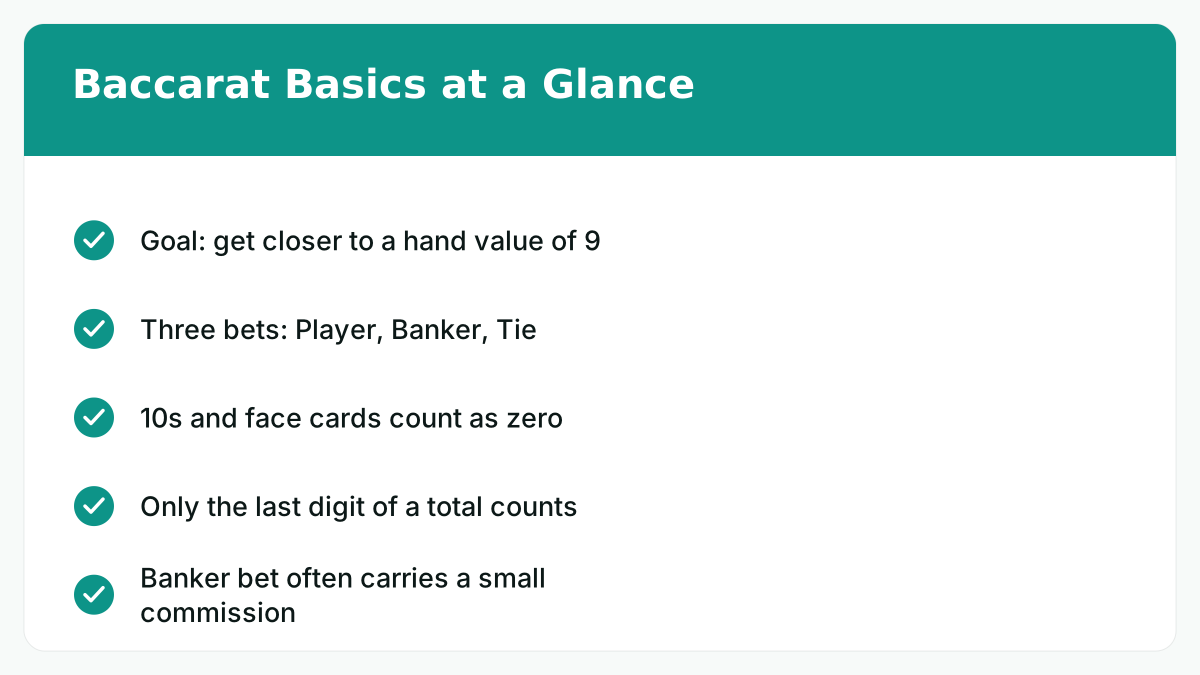
Baccarat has a reputation for being a game reserved for high rollers in tuxedos, but the truth is far simpler and far more welcoming than that image suggests. At its heart, baccarat is a comparing card game where the entire objective is to predict which of two hands, called Player or Banker, will finish with a total closest to 9. You are not trying to build a strong hand yourself, and you are not making a series of tricky decisions round after round. Instead, you are placing a wager on an outcome, then watching the cards fall according to fixed rules that never change based on your mood or your gut feeling.
This structure is exactly why baccarat online has become such a popular entry point for people who are new to the world of basics of table games. Two hands are dealt by the dealer, whether that is a live person at a physical table or a virtual dealer running a digital shoe. You never touch the cards. You simply decide, before the deal even begins, whether you think Player will win, Banker will win, or the two hands will tie. Once that bet is placed, the rest of the round plays out automatically according to the rules of the game.
Because there is no card counting skill required, no complicated betting progression to memorize, and no decisions to make mid-hand, baccarat sits comfortably among the easiest casino game online options for someone just starting out. It rewards patience and simple observation far more than it rewards deep strategic knowledge, which is part of why it has stayed popular across so many generations of players.
Why Baccarat Appeals to New Players
One of the biggest reasons new players gravitate toward baccarat is that the rules are fixed. There is no need to memorize charts of optimal plays or think several moves ahead the way you might with other gambling games online. The dealer, or the software running the digital table, follows the exact same drawing rules every single time, so you can focus purely on choosing which bet to place rather than worrying about making a wrong move.
Rounds also move quickly. A single hand of baccarat can be resolved in under a minute once betting closes, which keeps the pace lively without demanding much from the player in terms of active decision making. This combination of simplicity and speed is a big part of why baccarat sits so comfortably alongside other online gambling favorites, appealing both to people who want a relaxed, low pressure session and to those who enjoy the quick rhythm of back to back rounds.
- No card counting or complex strategy charts to memorize
- Fixed drawing rules mean every round follows the same predictable pattern
- Fast paced rounds that suit players who like quick results
- A simple three way bet structure that is easy to explain to a first timer
- A social, welcoming feel at both physical and online tables
Baccarat is one of the simplest casino game online options because you bet on the outcome rather than making complex decisions.
Understanding Player, Banker, and Tie Bets
Before any cards are dealt, every baccarat round starts the same way: players choose one of three main bets. These are the Player bet, the Banker bet, and the Tie bet. Understanding what each of these actually represents is the single most important thing a beginner can learn, because everything else in the game flows from this simple choice.
It helps to remember that you are betting on which hand will win the comparison, not on the cards you personally hold. Unlike games where your own hand matters directly, in baccarat the Player and Banker hands are simply two competing outcomes, and you are a spectator placing a prediction on one of them. This is part of what makes baccarat feel different from many other table games, and also part of why it is so approachable for newcomers.
Payouts differ noticeably between the three options. The Tie bet usually offers the highest payout of the three, but it also has the lowest chance of actually happening, which is an important trade off to keep in mind before you decide where to place your chips. Player and Banker bets, by contrast, are far more common outcomes and tend to make up the bulk of the action at any baccarat table, whether online or in person.
- Player bet: wagers that the Player hand will finish closer to 9
- Banker bet: wagers that the Banker hand will win the round
- Tie bet: wagers that both hands will finish with an identical value
- Player and Banker are the two most frequently placed bets at any table
- Tie offers a bigger payout but happens far less often than a Player or Banker win
The Player Bet
The Player bet is exactly what it sounds like: a wager that the hand labeled Player will end up closer to a value of 9 than the Banker hand. It is one of the two most common bets placed each round, largely because it is easy to understand and does not usually carry any extra commission on winnings. For a beginner trying to get a feel for the rhythm of the game, sticking with the Player bet for the first several rounds is a very reasonable way to start.
The Banker Bet
The Banker bet works the same way in reverse: you are wagering that the Banker hand will win. Over the long run, the Banker hand wins slightly more often than the Player hand, which is a quirk of the drawing rules used in the game. To balance this slight edge, many versions of baccarat apply a small commission on winning Banker bets. This commission is a normal part of the game and is not something to be concerned about, but it is worth knowing about before you sit down to play so the payout amounts make sense.
The Tie Bet
The Tie bet wagers that both the Player and Banker hands will finish with the exact same value. Because two independently dealt hands landing on the same total is a relatively rare event, the Tie bet is considered a higher risk side bet compared to either Player or Banker. Many experienced players avoid the Tie bet altogether, or use it only sparingly, since the odds of it hitting are noticeably lower even though the payout is more generous when it does land.
How Cards Are Valued in Baccarat
Once you understand the three main bets, the next building block is learning how the cards themselves are valued. This part of baccarat is refreshingly simple compared to some other card games, and once it clicks, the entire game becomes much easier to follow round after round.
Number cards from 2 through 9 count exactly as their face value shows. A 5 is worth 5 points, a 7 is worth 7 points, and so on. Aces count as one point each, which is a detail worth remembering since it differs from some other card games where aces can be worth more. Meanwhile, 10s and all face cards, meaning Jacks, Queens, and Kings, count as zero. This means a hand made up of a King and a Queen is actually worth zero points, not twenty, which can surprise players coming from other games for the first time.
The trickiest part for newcomers, and also the most important rule to memorize, is what happens when a hand's total goes above 9. In baccarat, only the last digit of the total counts. This is often described as dropping the first digit. So if a hand adds up to 14, the hand is actually valued at 4, because the leading 1 is simply dropped. This single rule shapes almost every hand you will ever see dealt, and once you internalize it, reading the table becomes second nature.
In baccarat, only the last digit of a hand's total ever counts toward its value.
- Cards 2 through 9: counted at face value
- Aces: always counted as 1 point
- 10s and face cards: always counted as 0 points
- Any total above 9: only the last digit counts toward the hand's value
- The highest possible hand value in baccarat is always 9
Quick Examples of Hand Values
Working through a few examples is often the fastest way to make this rule stick. Consider a hand containing a 7 and a 5. Added together, that comes to 12. Since only the last digit counts, this hand is valued at 2, not 12. Now consider a hand with a 9 and a 4. Added together, that comes to 13, but again only the last digit matters, so the hand is valued at 3.
- 7 and 5 equals 12, which becomes a hand value of 2
- 9 and 4 equals 13, which becomes a hand value of 3
- 8 and 8 equals 16, which becomes a hand value of 6
- King and 6 equals 6, since the King counts as zero
- Ace and 9 equals 10, which becomes a hand value of 0
These simple examples show why baccarat rewards familiarity rather than complicated math. After watching a handful of rounds, most players can calculate hand values in their head almost instantly, which is part of what keeps the game moving at such a comfortable pace.
A Typical Round Step by Step
Understanding the full sequence of a baccarat round helps new players follow the action confidently, whether they are seated at a physical table or trying out a casino game online for the first time. Once you have watched a round or two unfold, the pattern becomes very familiar, and you will find yourself anticipating each step before it happens.
The same basic flow applies whether you are watching a blackjack game table nearby or sitting down at a dedicated baccarat table. Both games share a family resemblance in that hands are compared against a fixed set of rules, though the specific mechanics differ. For baccarat specifically, the round follows a clear and repeatable structure every single time.
From Bets to Payout
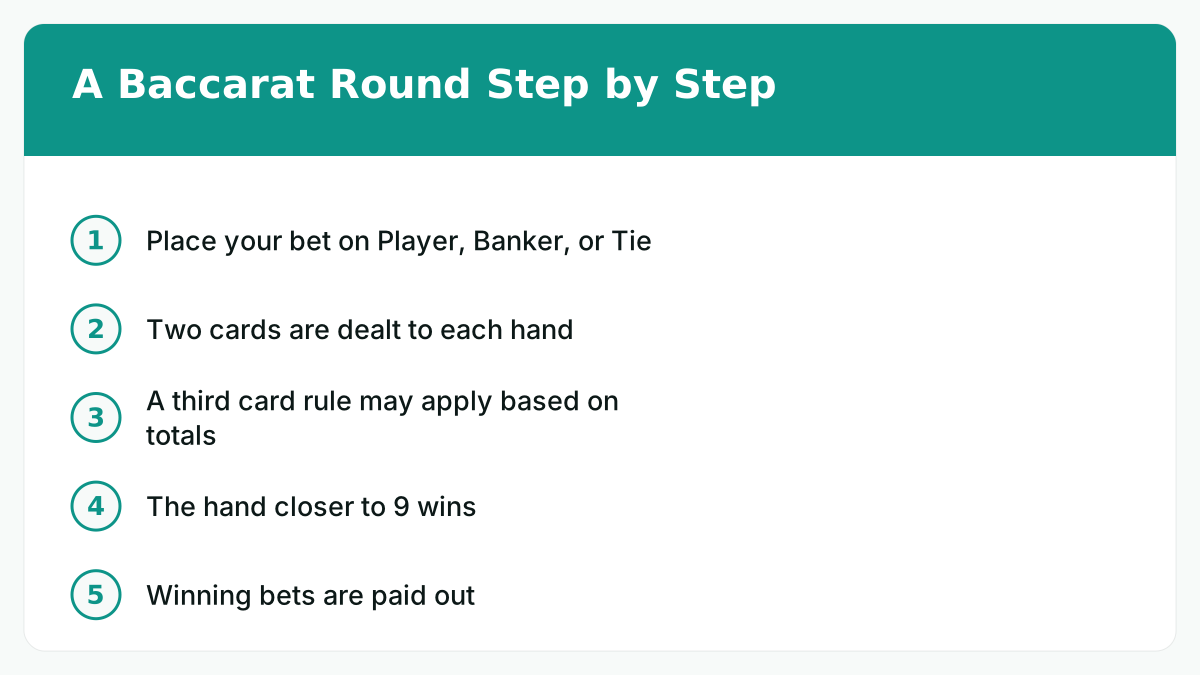
Every round begins with players placing their chips on the betting area, choosing Player, Banker, or Tie. Once betting closes, two cards are dealt to each hand, the Player hand and the Banker hand. At this point, depending on the totals showing, a third card rule may apply to one or both hands. This rule is fixed and automatic. Neither the player nor the dealer makes a judgment call about whether a third card should be drawn; it simply happens according to the established drawing rules built into the game.
After any necessary third cards are dealt, the two hands are compared. Whichever hand finishes closer to a value of 9 wins the round. Winning bets are then paid out according to the house rules for that table, with Banker wins often subject to the small commission mentioned earlier, and Tie wins paying out at a higher rate given their rarity. Once payouts are settled, the cards are cleared and a brand new round begins.
- Players place their chips on Player, Banker, or Tie before the deal
- Two cards are dealt face up to both the Player hand and the Banker hand
- The dealer checks the totals to see if a third card rule applies to either hand
- Any required third cards are dealt automatically according to fixed rules
- The two final hand totals are compared to determine the winner
- Winning bets are paid out according to the table's house rules
- The cards are cleared and the next round begins
Simple Tips for New Baccarat Players
Learning the rules is only half the picture. Building good habits early on will make your experience far more enjoyable, whether you are trying baccarat for the first time or looking to sharpen how you approach the game going forward. None of these tips require any special skill, just a little discipline and patience.
A great starting point is to simply watch a few rounds before placing real wagers. This gives you a chance to see how the dealer manages the third card rule in practice, how quickly rounds move, and how the payout process actually looks at the table you have chosen. Many online platforms even allow you to observe a live table or review recent hand history before committing any money, which is a low pressure way to build confidence.
Once you do start playing for real, it is wise to keep your bets simple. Sticking to Player or Banker rather than reaching for side bets like Tie is a sensible approach while you are still learning the rhythm of the game. Side bets can be tempting because of their bigger payouts, but they come with lower odds of hitting, and a beginner is usually better served by building confidence with the more straightforward options first. If you want to dig deeper into approach and pacing, a look at some general strategy tips can also be useful before you increase your stakes.
Setting a budget in advance is another habit that pays off immediately. Decide before you sit down how much you are comfortable spending during that session, and stick to that number regardless of how the rounds go. This is the same habit that helps with any online gambling session, not just baccarat, and it is one of the simplest ways to keep the experience fun rather than stressful.
- Watch a handful of rounds before wagering real money
- Start with Player or Banker bets rather than the Tie bet
- Set a firm budget before you begin playing and stick to it
- Take breaks between sessions to keep decisions clear headed
- Review the table's rules page so third card triggers are not a surprise
Carrying Habits Over from Other Table Games
Players who are already familiar with a blackjack 21 game often adapt to baccarat quickly, since both games revolve around comparing hand totals against a target number. If you already know your way around blackjack rules, you will likely find the transition to baccarat smooth, because the underlying logic of comparing two totals feels familiar even though the specific mechanics differ.
More importantly, good bankroll habits from blackjack transfer directly to baccarat sessions. Concepts like setting a session limit, avoiding chasing losses, and stepping away after a set number of rounds apply just as well at a baccarat table as they do anywhere else in a casino. Players who bring disciplined habits from one game to another tend to have a more enjoyable and controlled experience overall, regardless of which table they choose to sit at.
Good bankroll habits from a blackjack game table transfer directly to a baccarat session.
- Set a per session limit before you start, just as you would for blackjack
- Avoid increasing bets to chase a loss during a rough stretch
- Take short breaks to reassess how the session is going
- Treat baccarat and blackjack bankroll habits as interchangeable skills
- Track wins and losses loosely so you know when to stop for the day
Baccarat Online vs Playing in Person
Baccarat online has grown enormously in popularity because it offers many of the same fundamentals as a physical table while adding a few conveniences that suit modern players. Understanding the differences between the two formats can help you decide which setting fits your preferences best, and it can also help you know what to look for before you commit to a specific platform.
Online tables often move faster than their physical counterparts, since there is no need to physically collect cards, shuffle a shoe, or manually clear chips between rounds. This faster pace suits players who enjoy quick, back to back rounds without long pauses. Online platforms also typically let you review hand history easily, which is a helpful feature for anyone who wants to track patterns or simply confirm how recent rounds played out.
Platforms offering baccarat online often sit alongside other casino game online options like blackjack, roulette, and various card games, all housed within the same lobby for convenience. Some sites, such as nustar online casino, bundle baccarat with other table games in one lobby, which makes it easy to switch between games during a single session without needing to log into a separate platform.
What to Check Before You Play
Before diving into any baccarat online table, it is worth taking a few minutes to confirm the betting limits and payout rules for both the Banker and Tie bets. These details can vary from platform to platform, and knowing them ahead of time prevents any surprises once you start playing. It is also a good idea to look for clear rules pages so you understand exactly how the third card rule works on that particular table, since small variations do exist between different versions of the game.
Good table etiquette matters online just as much as it does in person, particularly at live dealer tables where a real dealer and other players are part of the experience. Being polite, patient, and following the pace of the table helps keep the atmosphere pleasant for everyone involved. If you ever have questions about a specific platform's rules, checking their frequently asked questions section is often the fastest way to get clarity, and reaching out to get in touch with support directly is always an option if something remains unclear.
- Confirm minimum and maximum betting limits before sitting down
- Check the payout rate for Banker wins, including any commission
- Check the payout rate for Tie wins, which is usually higher than Player or Banker
- Read the rules page to understand exactly how third card draws are triggered
- Look for hand history features so you can review previous rounds easily
- Confirm whether the table is a live dealer format or a fully automated one
Whether you prefer the atmosphere of a physical casino floor or the convenience of playing from home, the core rules of baccarat remain the same. What changes is the pace, the presentation, and the extra features available to you, so taking a moment to explore a platform before committing real money is always time well spent.
Is baccarat online the same as playing in a casino?
The core rules and bets are the same, but online tables often move faster and let you review previous hands easily.
What is the easiest bet for a beginner?
Many new players start with the Player or Banker bet since they are the simplest to understand and are placed more often than the Tie bet.
Why does the Banker bet sometimes have a commission?
Because the Banker hand wins slightly more often over time, many versions of the game apply a small commission to winning Banker bets to balance the payouts.
Do I need to know blackjack to understand baccarat?
No, but if you already know a blackjack 21 game, you will find baccarat's hand comparing format and bankroll habits easy to pick up.
What happens if a hand totals more than 9?
Only the last digit of the total counts, so a hand of 15 would count as 5.
Baccarat remains one of the most approachable card games available today, precisely because its rules stay consistent no matter where or how you play. Once you understand the three main bets, how card values work, and the simple step by step flow of a round, you have essentially learned everything you need to sit down and enjoy the game confidently. From there, it is really just a matter of practicing good habits, setting a budget, and taking your time to watch a few rounds before jumping in.
If you are looking to round out your table game knowledge, pairing what you now know about baccarat with a solid grasp of blackjack fundamentals is a natural next step, and that is exactly the kind of guidance you will find with Best Blackjack in Abu Dhabi. Whether your interest leans toward baccarat, blackjack, or simply understanding table games as a whole, taking the time to learn the basics first always pays off in the long run.
Ready to sharpen your table game knowledge further? Reach out to Best Blackjack in Abu Dhabi today and get answers to all your blackjack and baccarat questions.
Explore More Table Game Guides